Big science, explained for us Normies
Free science lessons for curious adults with zero background, about 15 minutes each. You poke the pictures, every new word gets explained, and a short game at the end shows you what stuck.
Everything you can understand here
Tap a subject to open it. Each one starts with its Basics, then branches into lessons. The ring around a lesson fills up as you read it.
Chemistry
- Space · coming soon
Money & Society
- Earth · coming soon
- Mind · coming soon
Tap a subject to see its lessons.
Start anywhere
Pick a subject. Start with its Basics, or jump straight into a lesson about a new discovery. Each one ends with a mini game.
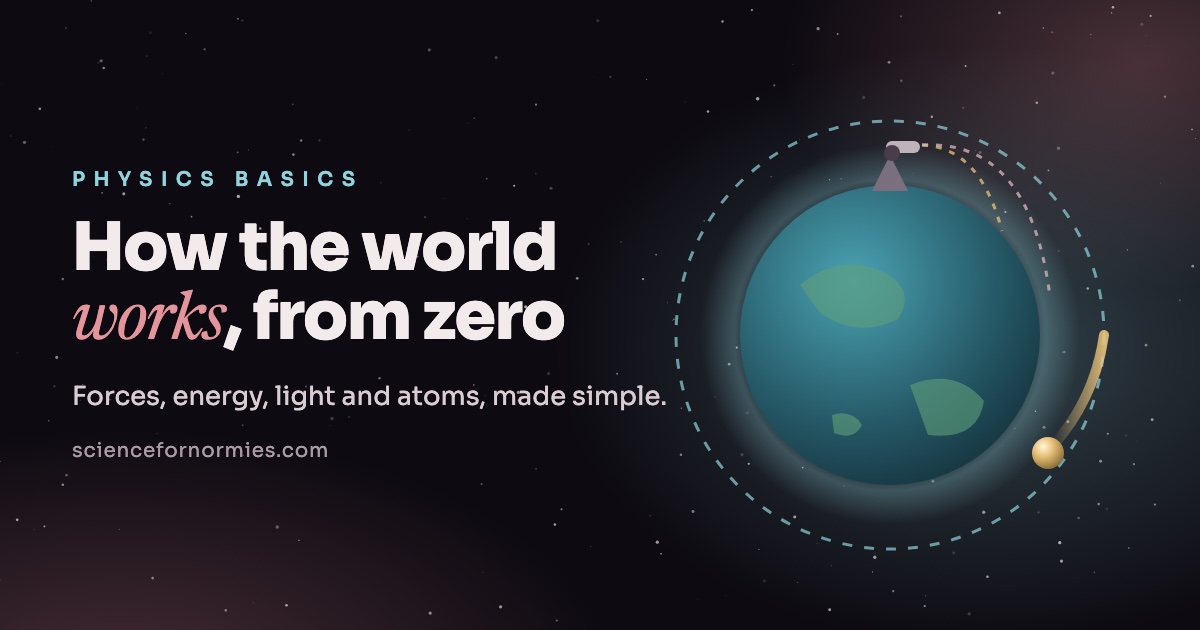
Physics Basics
Physics from zero: motion, forces, gravity, energy, heat, sound, light, electricity, magnets, particles and E = mc², with pictures and things to try.
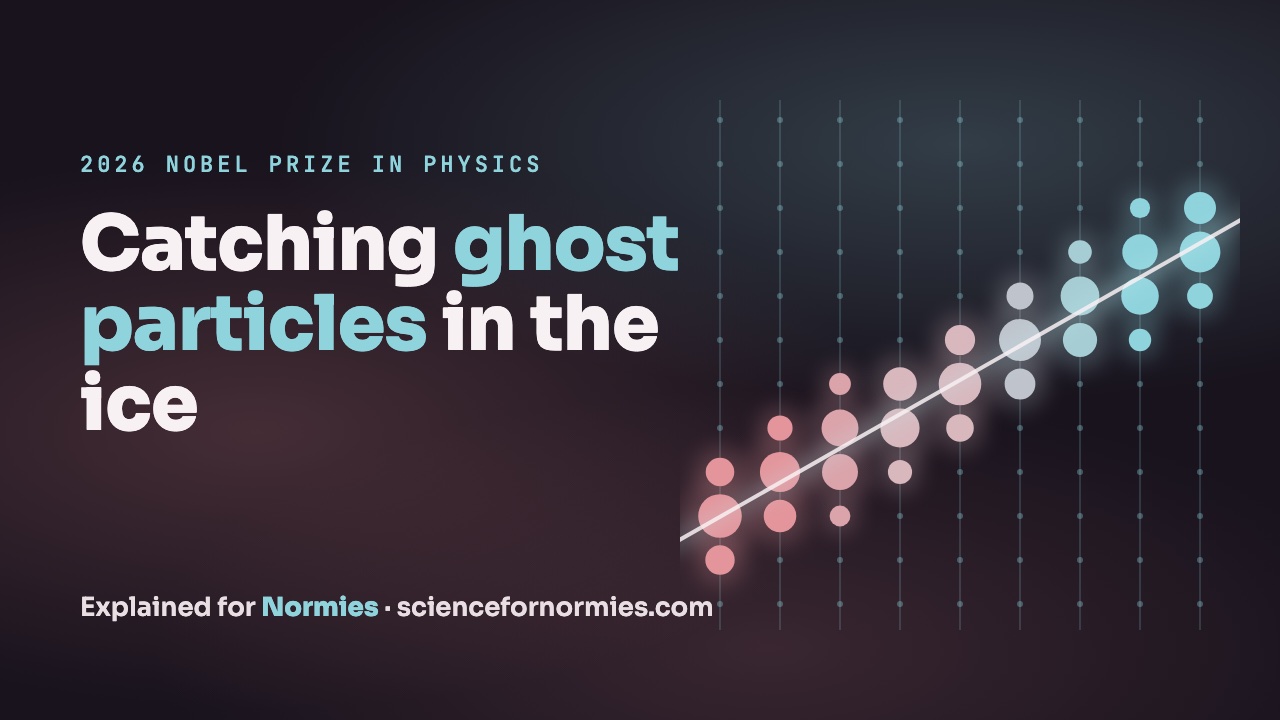
Ghosts in the Ice
How a block of Antarctic ice catches particles from black holes, and won the 2026 Nobel Prize in Physics.
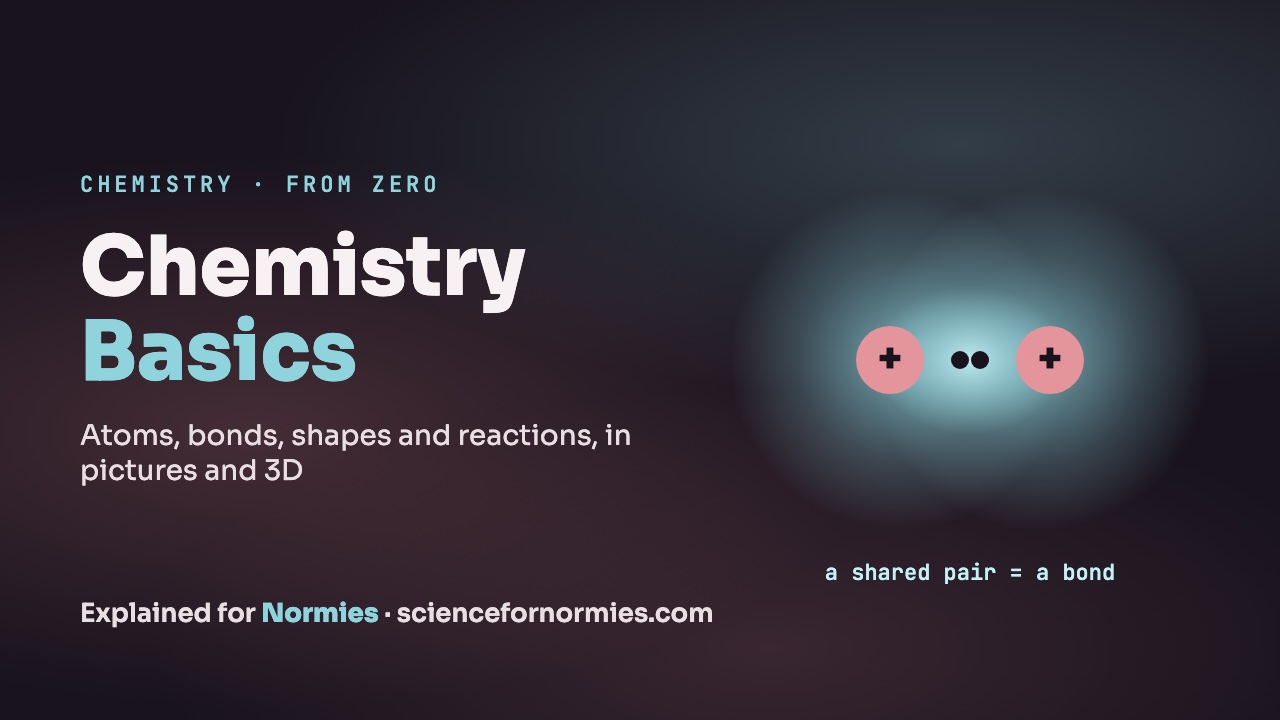
Chemistry Basics
Chemistry from zero: atoms, electron layers, bonds, ions, 3D shapes, reactions, catalysts and mirror molecules, with pictures and 3D models.
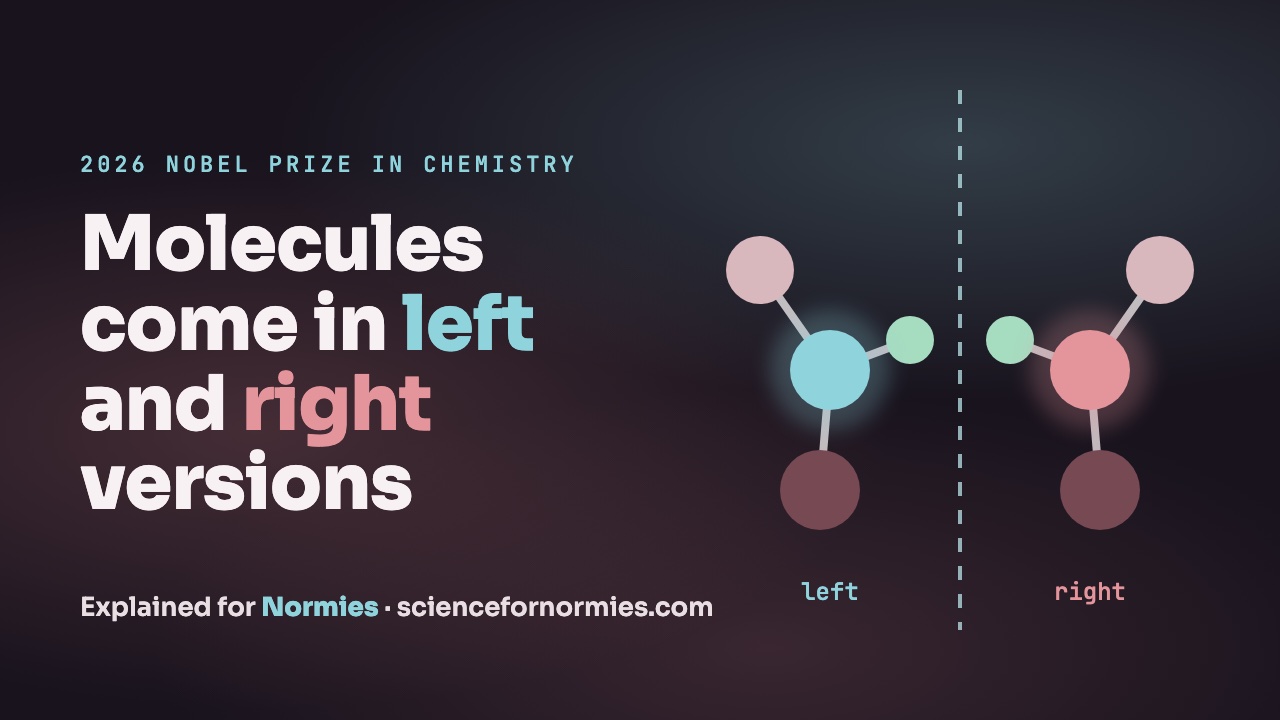
Mirror Molecules
Why molecules come in left and right versions, and how Kagan and Soai made chemistry pick one hand. The 2026 Nobel Prize in Chemistry.
Brain Basics
How your brain works, from zero: cells, nerve cells, the cell’s charge, how a nerve cell fires, synapses, senses and brain wiring, then the proteins, DNA and genes behind them, with pictures, 3D models and things to try.
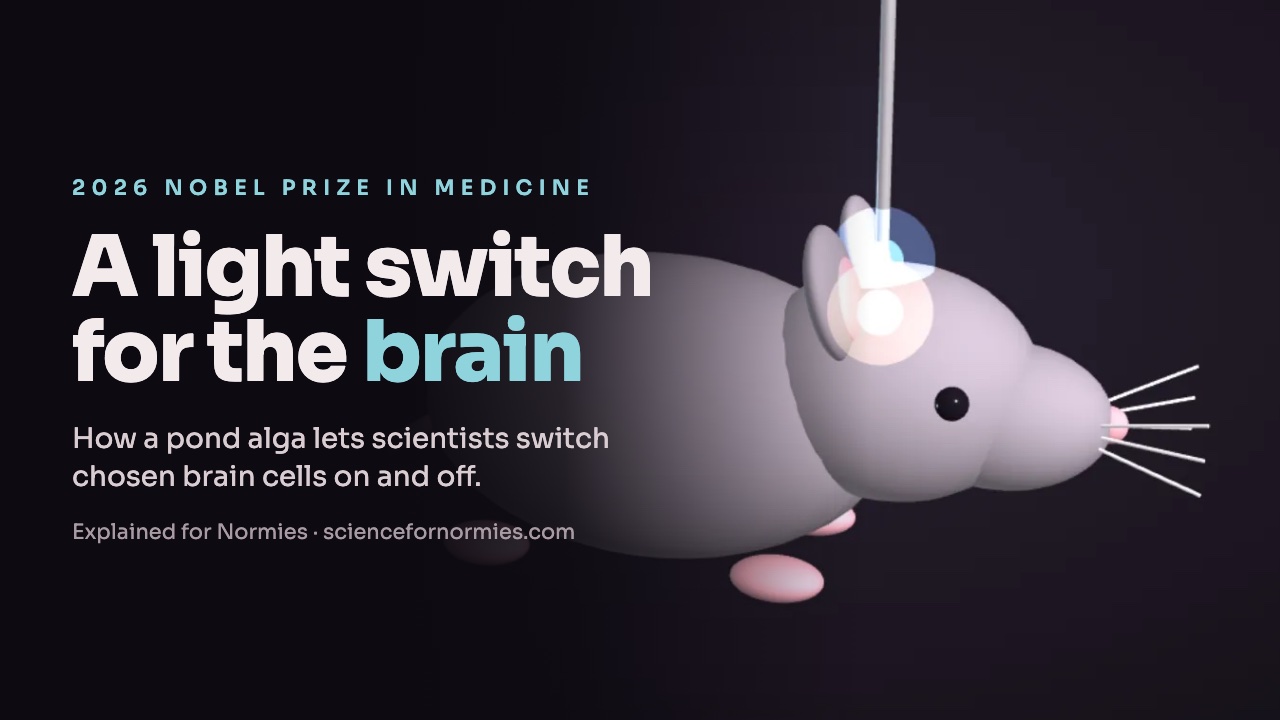
A Light Switch for the Brain
How a pond alga’s light-opened gate lets scientists switch chosen brain cells on and off: optogenetics, the 2026 Nobel Prize in Medicine.
Money Basics
Financial products from zero: money, inflation, interest, bonds, stocks, index funds, risk, futures, options, leverage, private equity, crypto and bubbles, with pictures and quick checks.
Who Steers the Economy?
Why the economy swings between booms and slumps, and how central banks steer it with interest rates and believable promises: the 2026 Nobel Prize in Economics.
Coming next: Space, Earth and Mind.
Learn it the way your eyes like it
Pick any idea that sounds interesting. Everything connects, so you can't take a wrong turn.
Drag, tap, guess, then see what really happens. Ideas stick when your hands are involved.
Every idea you read glows on your map, and each lesson ends with a game to prove it to yourself.
Good questions before your first lesson
What is Science for Normies?
Science for Normies is a free website of short, visual science lessons for adults with no science background. Each lesson explains one big idea, often a new discovery like a 2026 Nobel Prize, in about 15 minutes. You learn by dragging and tapping pictures, every new word is explained, and a mini game at the end shows what stuck.
Can I learn science as an adult if I was bad at it in school?
Yes. Most people who feel bad at science were taught too fast, with too many new words at once. Every lesson here starts from zero: each word is explained the first time it appears, and each step is a picture you can play with instead of a formula to memorise. Quick checks along the way show you that it is sinking in.
Where should I start?
Pick whatever sounds interesting on the knowledge map. Every lesson explains its own words, so there is no wrong first step. For the gentlest start, open Chemistry Basics: short units on atoms, bonds and reactions, with 3D models to spin. If a science headline caught your eye, start with the lesson about it, like Ghosts in the Ice for the 2026 Nobel Prize in Physics.
Is it really free? Do I need an app or an account?
It is free, with no app, no account and no subscription. Lessons run in any web browser, on a phone or a computer. Your progress, like which ideas you have read and your best game scores, is saved only in your own browser. Tip: add the site to your phone’s home screen so a lesson is one tap away.
How do you make sure the science is right?
Each lesson is built from the original sources, like the Nobel committee’s announcement and the research papers, and checked against them before it goes live. The sources are linked at the end of every lesson. Explanations are simplified on purpose for beginners, and the animations are illustrations rather than exact simulations, but nothing should be wrong.